Showing posts with label CULTURE - Art. Show all posts

Saturday, June 4, 2011

Model boat-building on Bequia

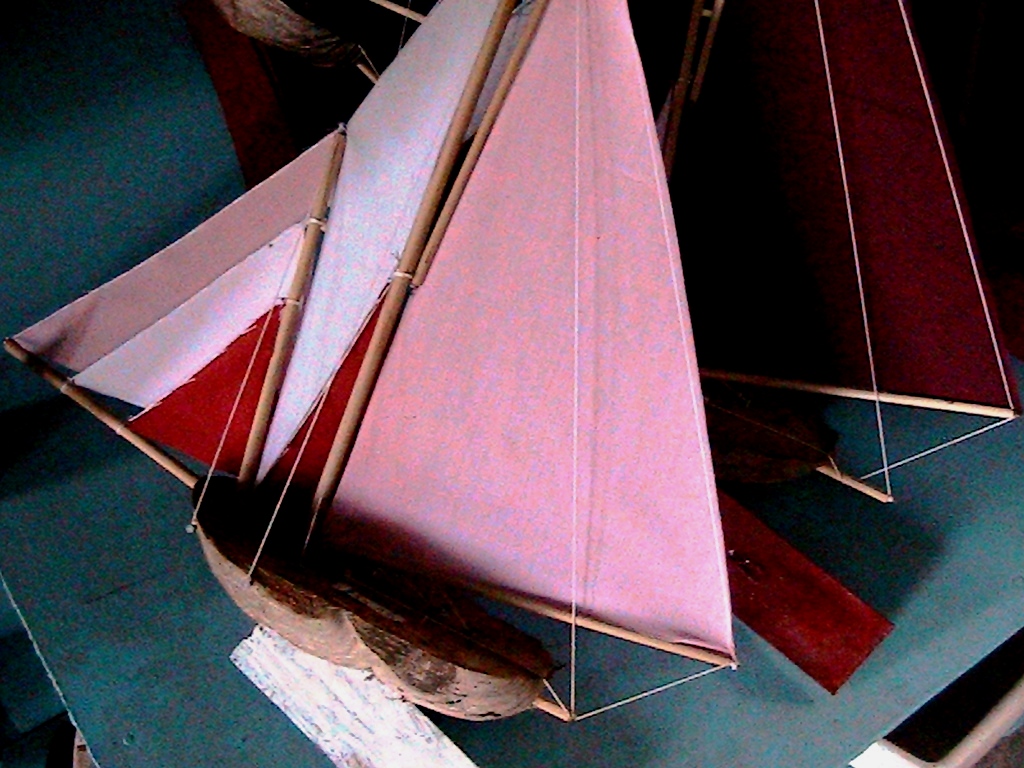
Reflecting the reliance on the sea, which has included the building of 27 foot open whalers and 165 foot ocean-trading schooners, model boat-building seems to be a specialty of Bequia.

I saw a handful of workshops in Port Elizabeth, where models of old schooners and America's Cup yachts were displayed out front while men worked on their latest works on street pavements and in back rooms.

It began in the 1800s as a hobby, introduced by Scottish settlers, whalers and traders, who used gumwood and cedar from the island's forests. More recently, it has become especially popular since a local by the name of Lawson Sergaent created and presented a model of the Royal Yacht HMS Britannia to the Queen on a visit she paid to Bequia in 1985. Lawson can now be seen at the Bequia Maritime Museum where he runs tours and shows the latest models he is building.


Also popular are the model coconut boats, made from half a coconut husk and topped with sails. These are set into the sea by local kids every year during the Bequia Regatta at Easter time. There may be up to 80 or 90 coconut boats, all being swept by the breeze across Port Elizabeth harbour at one time, in the most coveted coconut boat race of the Caribbean. Not to miss!
Thursday, April 14, 2011

Village art fair

For a week, the coastal village of Carbet (up in the rugged northwest of Martinique), was holding an art fair. It was set out in a field, with stands holding works by local artists.

There seemed to be a definite Martinique art style, always with lots of colour.

Here are some of my favourites:

Landscapes and people:


A naive painting: church, palm trees, mountain:


Paintings by school children (together, I thought they looked fantastic):


At this stand, they were selling spices and local seeds (for planting or making jewellery).


The lady on the stand was explaining it all to the school children.


At the end, the drinks stand was popular. Lots of different rum punches in bottles and a couple of interesting and actually very good juices (celery and basil).


Those school children not listening to the lady talking about seeds were the ones more interested in the drinks stand! 


Monday, March 21, 2011

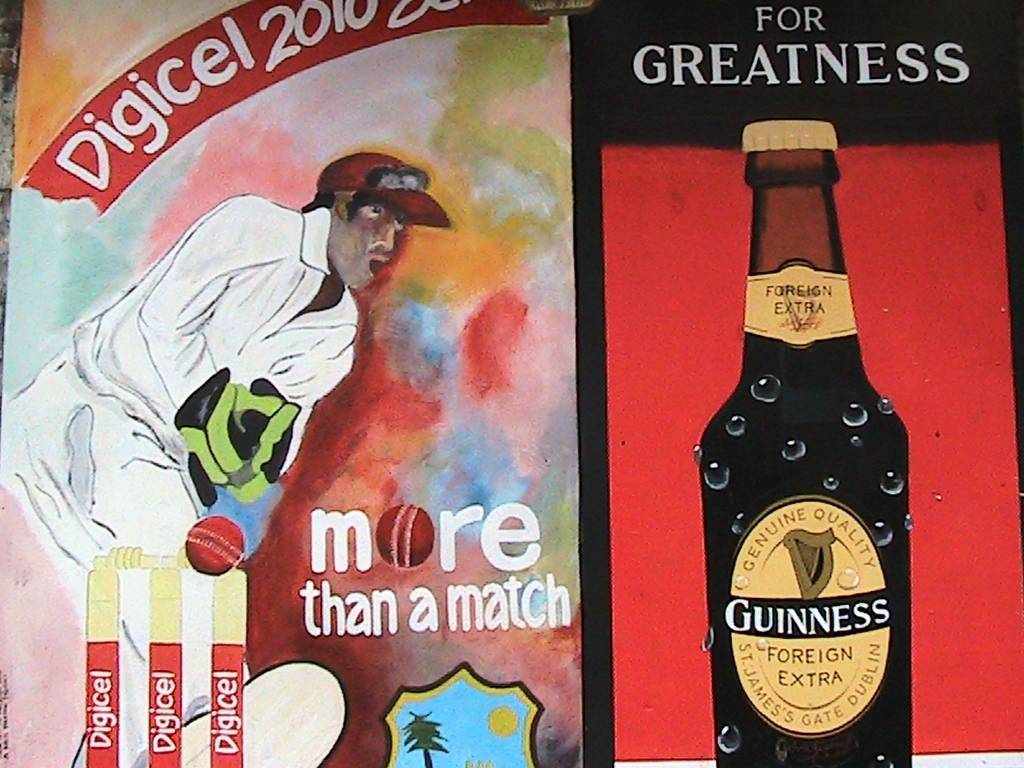
Advertising in Dominica

A few interesting and colourful examples of global, regional and local brands advertising in Dominica.


Sunday, December 19, 2010

Brazilian Gold Rush


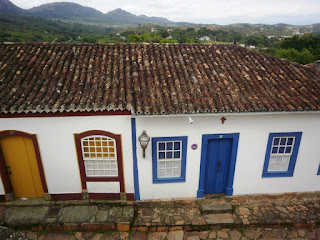
A couple of weeks ago I headed to Tiradentes and Sao Joao del Rei, gold-era colonial towns located in the state of Minas Gerais (inland from Rio). Here's some info on the amazing Brazilian gold rush and a few pics of these beautiful towns.

The gold rush, centred around the southern hills of Minas Gerais, began in 1698 and lasted approximately 100 years. At the time, before the gold rushes of California, South Africa and Australia, more gold was reputedly mined from Minas Gerais than the rest of the world combined, and the town of Ouro Preto with 110,000 people was twice as large as New York. Most of the gold was sent to Portugal and traded with the English in return for industrial goods. However, some of the wealth remained behind, and can still be seen to this day in the form of beautiful colonial towns with numerous churches elaborately-decorated with gold interiors.  

Namoradeira looking from Tiradentes to the Sao José hills, from whence came some of the gold
The hills again, in the mist

Stone road to the river, built by slaves


Santo Antônio church, Tiradentes, completed in 1785, has an all-gold interior and a frontispiece by Aleijadinho.


Many of these churches were the work of one of Brazil’s most famous artists- Aleijadinho, who perfected the graceful Mineiro Baroque style. Using soapstone on the outside and wood inside, it included elaborate detail and more often than not, cherubic angels with wavy hair. Most incredible is that Aleijadinho, who was crippled by a debilitating disease (which meant the loss of his fingers, toes and use of his lower legs), carried on his work by strapping chisels to his arms.  
Nossa Senhora Rosário dos Pretos, Tiradentes, built in 1708 on the site of a former chapel.

Interior of Sao Francisco de Assis, Aleijadinho's first complete project from 1774,  in Sao Joao del Rei.

Colonial-style houses, just like the Alentejo in Portugal.


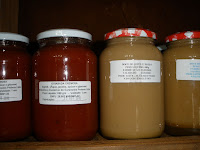
The colonial towns are between a four and six hour drive from Rio, over the mountains, and make a great long-weekend get-away. Apart from the beauty of the towns, the climate is cooler, there are stunning mountain ranges nearby and there is good rustic farm-cooking (typically bean stews, fried mandioc flour and grilled chicken). Best of all, the Mineiros are extremely down-to-earth, gentle and hospitable folk and the lifestyle is rural- still traditional and slow-paced.  

Bumpy ride
On the Smoking Mary train to Tiradentes


From the farm to the town square

Pewter everywhere
Typical Mineiro artwork on sale

Mobile pineapples
Huge choice of Mineiro cachaça
Sweet as can be Doce de Leite

Tuesday, December 7, 2010

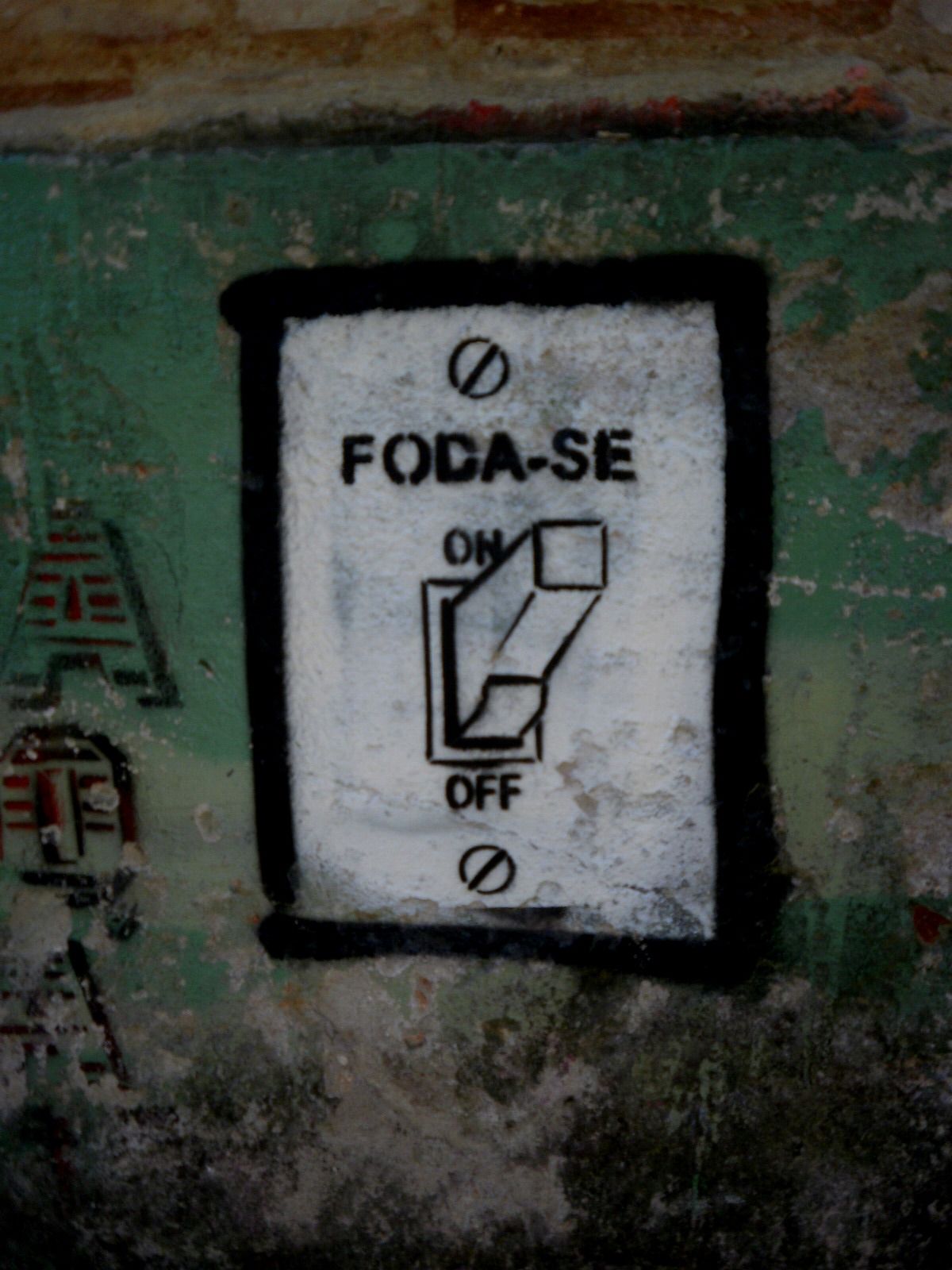
Rio graffiti

Japanese- modern and eccentric
The best art in Rio is out there in the streets.
A make-believe world

Violent society...and a pineapple
Rude, but very clever


World Cup 2010-2014 in Santa Teresa

Prize for originality

Thursday, September 16, 2010

September 2010 - Santa Teresa art fair

Taking the old tram from the Centro up to Santa Teresa.


Turn of the century architecture. Streets reminiscent of Lisbon.


Largo das Letras house, book-store and art stalls.

Looking over Largo do Guimaraes, people and trams.


Art in splendid and abandoned old manor houses.


The old bar of Armazens Sao Tiago.


Graffiti art on walls. Drugs, sex and football.


View from a millionaire's pad over favelas and the Sugar-Loaf.


Sculptures from scrap metal. A bright green beatle.